 Janaan Weaver
Why the Recurring Revenue Model Changes Everything
Let's be honest about the way most businesses think about sales.
You hustle to hit your number in January. You hit it. Great, amazing, everyone is thrilled! February starts and you are immediately, terrifyingly back at zero. Again. Every single month, you are starting over. It's a treadmill, and the speed never really goes down.
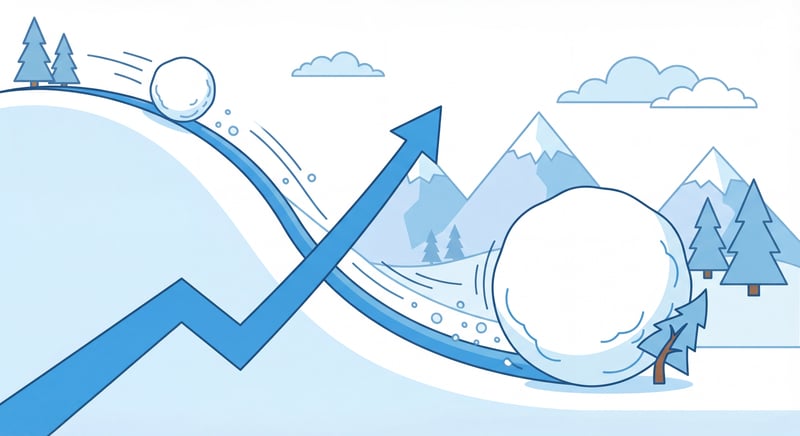
Now imagine a different version of that story. One where the revenue you earned last month doesn't disappear, it just... stays. And builds. And compounds. And next month you're starting ahead instead of from scratch.
That's the recurring revenue model. And yes, it is as good as it sounds.
This isn't some niche idea cooked up in a Silicon Valley whiteboard session. It's the operating logic behind some of the most durable, profitable businesses on the planet and increasingly, it's available to companies of every size, in every industry. The math is genuinely different. The business is genuinely different. And once you see it, you cannot unsee it.
Key Takeaways
- A recurring revenue model generates predictable, compounding income that one-time sales simply cannot match over time.
- LTV (customer lifetime value) is the single most important number in your revenue strategy. Most businesses aren't calculating it. (Are you?)
- Churn is the quiet killer of ecommerce revenue growth. Small, consistent losses have a way of adding up to a very unpleasant surprise.
- Membership recurring revenue doesn't just outperform transactional models on paper but it builds something a one-time sale never can: a relationship.
- The recurring revenue model examples that work best aren't complicated. They just stopped thinking about the transaction and started thinking about the person.

How to Calculate LTV (And Why You Need to Know It)
Here is a thing that will make you feel a little uncomfortable: if you don't know your customer's lifetime value, you're making every major business decision from marketing spend, acquisition strategy, to pricing, based on vibes.
LTV, or lifetime value, is the total revenue you can expect from a single customer over the entire course of your relationship. The formula is not complicated:
LTV = Average Purchase Value × Purchase Frequency × Customer Lifespan
A one-time buyer who spends a little and disappears looks fine as a line item in a single transaction report. Measured against a recurring customer paying a predictable amount month after month, year after year? They're not even in the same conversation. That's why having a data-driven framework for increasing customer LTV is essential for any business serious about long-term growth.
And when you layer acquisition costs on top of that (what you actually spent to bring that customer in the door) the gap gets even harder to ignore. Spending real money to acquire someone who buys once and never comes back is, to put it plainly, a very expensive way to run a business.
The catch, and there always is one, your LTV projections are only as accurate as your retention. Which brings us to the part of this conversation that nobody particularly enjoys.
Churn Rate in Ecommerce: The Number That Quietly Eats Your Lunch
Churn rate in ecommerce is the percentage of customers who stop buying from you or cancel their membership in a given time period. It sounds manageable until you watch it play out over twelve months and realize you've quietly lost nearly half of the customers you started the year with.
It's the leaky bucket problem. You can pour new customers into the top as fast as you want. If the bucket has holes, you are not actually building anything just very busily staying in place.
Research from Bain & Company has shown that even modest improvements in customer retention can produce gains in profitability. A 5% increase in customer retention can increase profits by 25% to 95%.1 The reason the impact is so dramatic? Retained customers don't just spend more over time. They cost less to serve. You've already done the hard work of earning their trust. Everything after that is gravy.
For any business running a subscription or membership model, churn isn't just an operational concern, it's THE metric. The trouble is, most ecommerce brands are calculating churn wrong, and that means the financial picture they're relying on is built on something that is not going to hold."
Ecommerce Revenue Growth: What the Two Models Look Like
You don't need a spreadsheet to feel the difference between these two growth trajectories.
A traditional one-time sales model means constant hustle. You're re-acquiring, re-engaging, and re-convincing every cycle. Marketing costs stay high. Conversion rates stay unpredictable. Ecommerce revenue growth feels like running uphill in the rain. There are good months and there are months that you'd rather not discuss.
A recurring model changes the underlying shape of the business. Revenue is predictable. It's reportable. It compounds. You can see it coming, which means you can plan around it, hire smarter, and invest more confidently, build the kind of experience that makes people want to stay instead of wondering why they signed up.
That last part matters more than people give it credit for. Predictability isn't just a financial virtue. It's a strategic one. When you're not scrambling to make up ground, you can actually think about what you're building.
Recurring Revenue Model Examples That Actually Work
The recurring revenue model is not just for streaming services.
Retail. Dollar Shave Club turned razors, RAZORS! A thing people have been buying the same way since forever into a must-have subscription. They didn't invent a better razor. They invented a better relationship. And then Unilever bought them for a billion dollars.
Employee benefits. This is one that genuinely doesn't get enough attention. When a company offers an ongoing perks or discount program to its employees that includes  real savings on travel, dining, entertainment, everyday purchases, they are running a recurring value model. The employer pays a consistent fee; employees access meaningful benefits every single month. The perceived value grows over time. So does retention. Both of the program and of the people in it.
Software. The SaaS pivot is the most documented recurring revenue transformation in modern business history. Adobe, Microsoft, Salesforce. The companies that made this shift didn't just change their pricing but they changed how they thought about customers entirely.
Health and wellness. The gym membership is probably the original recurring revenue model. What's changed is everything around it related to employee health: apps, coaching programs, wellness platforms etc. All of them run off of the same logic: consistent value, consistent payment, relationship over transaction.
What connects all of these recurring revenue model examples isn't the industry or the price point. It's the mindset shift. Every single one of them stopped optimizing for the sale and started optimizing for the relationship.
Membership Recurring Revenue: The Part Where It Gets Personal
Membership recurring revenue deserves its own conversation because it does something that a straightforward subscription doesn't always manage: it makes people feel like they belong to something.
That is not a small thing. Members who feel genuine belonging don't just renew...they advocate. They become the kind of customers that competitors genuinely cannot steal, because what they have with you isn't just a transaction history. It's an identity.
The programs that do this well are the ones delivering real, tangible value that members can actually point to. Not theoretical savings. Not rewards that expire before anyone uses them. Actual dollars off things people buy. When a member can look at their account and see what they've saved (and feel good about it!), that's a retention story that writes itself every single month.
From a business operations standpoint, membership recurring revenue also just makes the analytics cleaner. You can see who's engaging, catch at-risk members before they quietly disappear, and build retention campaigns around what's actually happening rather than what you hope is happening.
The Model Is the Shift
Here's the honest truth: moving from one-time sales to a recurring revenue model is not just a pricing change. It's a change in how you think about what you're actually selling.
You're not selling a product or a service. You're selling a relationship that earns its renewal every single month.
That is harder. It requires better onboarding, more intentional engagement, and genuine accountability to deliver value consistently. A churned member means something more than a missed sale. It's a relationship that didn't work and you should take that seriously.
The businesses that make this shift don't look back. The compounding math of a well-run recurring revenue model is one of the most reliable engines for sustainable growth that exists. And the alternative of starting from zero every single month, forever…well. You already know how that feels. To truly understand how this predictability impacts your bottom line, you need to master the core metrics behind it—learn How to Calculate LTV Ratio and CAC to see exactly how recurring value outpaces traditional acquisition costs. The alternative of starting from zero every single month, forever…well. You already know how that ends.
Ready to Stop Starting From Zero?
Access Development has spent decades helping companies build membership and loyalty programs that actually keep people coming back. The kind where members can look at their account and see real value, every month, on things they were already going to buy anyway.
From employee perks platforms to consumer discount networks, Access brings together the largest merchant-funded savings network in North America with the strategy and tools to make recurring value something your customers can feel. Not someday. Now.
If you're ready to build a revenue model that compounds instead of resets, let's talk. Reach out to the Access Development team and let's figure out what membership looks like for you.
Retention doesn't happen by accident. The brands seeing the strongest recurring growth are usually the ones investing continuously in improving the post-purchase customer experience to drive long-term retention and loyalty long after the first transaction is complete.
Endnotes/Resources
1. Bain & Company. "Retaining Customers Is the Real Challenge." bain.com. https://www.bain.com/insights/retaining-customers-is-the-real-challenge/

Topics: Rewards Programs, Customer Engagement, Discount Programs, customer retention, customer loyalty, B2B, loyalty programs

.jpg)
.jpeg)


Share your Comment.