 Ryan Marvel
Many ecommerce brands focus their marketing budgets on acquisition. This makes sense on the surface. After all, without customers, there’s no business. Investing in optimizing ad spend, perfecting landing pages, and boosting conversion rates is the obvious move.
However, that often means they neglect what happens after customers click the buy button. With acquisition costs rising over the last decade, that can be a costly mistake.
Customer expectations are high after checkout, but when brand execution fails, churn increases, revenue leaks, and customer lifetime value drops – all of which eat into your margins.
How can you close that gap?
By improving the experience for customers after they’ve made a purchase, thereby reducing churn and increasing the chances they will buy again.
This playbook breaks down the key strategies you can follow to improve the post-purchase experience and build predictable, repeat revenue.
Key Takeaways:
- The post-purchase experience should be seen as a revenue channel, with every touchpoint after checkout providing an opportunity to improve the LTV:CAC ratio and reduce ad spend dependency.
- Start by identifying where you're losing the most revenue post-purchase, from WISMO tickets to subscription churn. Fix that first, then layer in the rest.
- Post-purchase strategy scales through automation. Choose platforms that integrate with your existing stack and consolidate workflows to prevent tool fragmentation from eating into your margins.
Why the Ecommerce Post-Purchase Experience Matters
Getting the ecommerce post-purchase experience right is how brands grow through retention rather than remaining dependent on paid acquisition.
Getting the customer to make a purchase is the first win, but this is actually where the real work begins. If you can keep your customers buying, you're improving the ratio between your customer lifetime value and your customer acquisition costs (your LTV:CAC ratio) – which is where real profitability lives. Learn how to calculate your LTV:CAC ratio to measure your ecommerce business growth.
Here’s why the post-purchase experience matters:
- Repeat buyers spend about 67% more per transaction than first-time shoppers.1
- After making three purchases, the odds of a customer buying again increase to 62%.2
- Loyal customers are worth up to 22 times more than average customers.3
- 87% of customers are likely to avoid a brand after just one bad experience.4
So, how should you go about improving your customers’ experience following a purchase? Follow this playbook to boost retention and grow your bottom line.
Post-Purchase Experience Playbook: 5 Steps to Boost Retention
 To improve the post-purchase experience, build on a system of connected touchpoints that work together to build trust and give the customer more reasons to return.
1. Improve Post-Purchase Engagement with Proactive Communication
Treating every communication touchpoint as an opportunity to reinforce trust, instead of simply delivering information, is the key to effective post-purchase engagement.
Customer anxiety is at its peak immediately after the first purchase is made. If you go silent on them during this crucial stage, you’re damaging customer trust.
WISMO (Where Is My Order?) queries can account for a significant portion of support tickets for high-volume stores. Proactive updates help to eliminate most of them before they happen.
This means sending:
- An immediate order confirmation with a clear summary, estimated delivery date, and tracking link.
- Proactive shipping updates when the item is shipped, in transit, and out for delivery.
- Delay notifications before the customer asks. Things will inevitably go wrong, but when they do, customers always appreciate proactive updates, resulting in fewer support tickets and increased satisfaction scores.
Take things further with branded tracking pages. Direct customers back to your domain to check their order status, where they’ll also find product recommendations and invites to your loyalty program.
Not only does this give them a reason to visit your website, but it also improves the experience and helps reduce the gap between purchases. Fresh Clean Threads did this and saw a 10% increase in second-purchase revenue.5
For lean teams handling high order volumes, tools like Malomo and AfterShip can automate the whole post-purchase communication flow, with everything from order confirmations to delay alerts, without adding headcount. This keeps the experience consistent as you scale.
2. Enhance Post-Purchase Evaluation with an Exchange-First Approach
The post-purchase evaluation phase is where customers make a decision on whether they want to return their purchase to you or not. How effectively you handle returns is often the deciding factor.
For high-volume stores, returns are more than a customer experience issue, they directly impact your margins. Beyond simply making the returns process easier, shift to treating returns as a revenue retention tool.
You can do this by adopting an exchange-first approach. Don’t default to a refund when a customer initiates a return. Instead, present alternatives like he same product in a different color or size, a replacement product or store credit.
The goal is to keep the customer happy while keeping the revenue in your business. The results can be impressive. For example, after Australian sportswear brand LSKD switched to this approach, it retained 53% of return revenue.6
Platforms like Loop Returns and ReturnGO can automate this process for you, helping to protect your margins and retain the customer.

3. Scale Your Subscription Revenue
If you already run a subscription model, your challenge is converting more one-time buyers into subscribers and keeping them after they sign up. Do this by:
- Improving the thank you page. This is the highest-intent moment following the purchase, but many brands underuse it. Present a subscription offer immediately using a tool like Rebuy or AfterSell, with a discount on recurring orders or free shipping.
- Running a subscription sequence. Where a customer doesn’t convert immediately, build a nurture sequence into your email flow, timed around the natural replenishment cycle.
- Removing friction. Give customers more control via a self-service portal, where they can swap products or change frequency without contacting support, reducing churn.
- Pre-empting cancellations. Analyze churn data to pinpoint the most common drop-off points, then send targeted emails with loyalty perks or surprise bonuses before they happen.
4. Build Post-Purchase Loyalty that Changes Behavior
Post-purchase loyalty isn't limited to the process of rewarding transactions. Instead, it involves building a relationship with each customer that makes your brand the obvious choice for them.
Perhaps you have a loyalty program in place already. Encouraging customers to feel connected to your brand can lead to a 306% higher lifetime value.7
But offering points and basic discounts is just the start. A common retention question is whether upsells or loyalty initiatives drive stronger lifetime value. This guide on post-purchase upsells vs. loyalty programs breaks down which strategy performs better.
Is your program actually changing customer behavior? Or are you simply rewarding purchases they would have made in any case?
Take these steps to improve your loyalty efforts:
- Shift to experiential rewards. Offering experiences drives real loyalty and creates an emotional investment. Some examples include early access to product launches, VIP support channels, and members-only content.
- Trigger behavior rather than just rewarding it. With your tiered programs, show customers how close they are to unlocking the next level. Use a targeted nudge to tell them they’re just one purchase away, turning your program into a conversion tool.
- Make your VIP tier genuinely exclusive. Your top customers probably drive a high share of revenue, so keep them locked in by offering free shipping, surprise gifts, and guaranteed discounts.
Building these layered retention systems is straightforward with platforms like Smartrr and Recharge, which can manage membership tiers along with subscriptions.
5. Turn Customers into Advocates
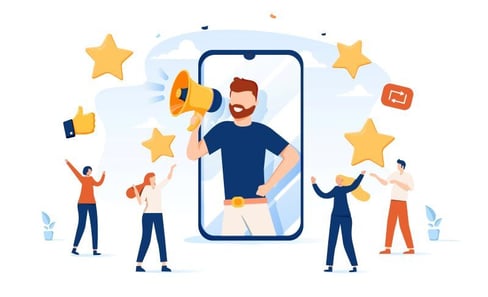 Many brands have referral programs. The question is whether the programs are working hard enough.
Referred customers have a 16% higher lifetime value and 37% higher retention rate,8 making advocacy one of the most cost-effective ways to lower acquisition costs. But a “give $10, get $10” only scratches the surface.
Here’s how you can get more from your advocacy efforts:
- Turn top referrers into ambassadors. These are real customers who already love what you’re selling, so give them the incentive to go further in the form of ambassador status, exclusive perks, and commission-based rewards.
- Make UGC (user generated content) easy for customers to create and share. Don’t just ask them to post, give them something they can work with, like a card in the packaging with a hashtag and clear incentive.
- Feature the best UGC on your social channels and product pages. When customers see their content featured, they’re inspired to create more.
- Tier referral rewards. Rather than offering a single reward for a referral, escalate the incentive. Offer a free product after their third referral and a meaningful discount after the fifth, turning one-time action into ongoing behavior.
- Integrate advocacy into your flows. Don’t bury referral prompts on a dedicated web page. Instead, embed them into your order confirmation email and delivery notification. Take advantage of these moments when customer satisfaction is highest.
If it sounds like a lot, you can use platforms like Yotpo and Okendo to automate much of this process.
Ways to Modernize Your Ecommerce Post-Purchase Experience in 2026
Customer expectations after the checkout process are higher than ever, but the gap between what customers expect and what brands deliver continues to widen.
Modernizing your ecommerce post-purchase experience is not simply about adding more touchpoints. Instead, it’s more about making your existing touchpoints smarter.
Leading DTC (direct to consumer) brands are doing things differently in 2026, and you can do the same to enhance the experience for your customers and generate more revenue. For a deeper look at emerging strategies, explore 7 ways to modernize your ecommerce post-purchase and see how leading brands are adapting their post-purchase strategy.
Personalized Video at Scale
Forget generic thank-you emails. AI has made it possible to generate video messages at scale, from setup guides to thank-you messages that reference what the customer bought, without any need for a production team.
Shopify app Maverick is one example of a tool that uses AI to personalize videos for each customer with just one recorded template.
Used by brands like Magic Mind and Dr. Squatch, Maverick integrates with Omnisend and Klaviyo. By automatically inserting the customer’s name, it can boost repeat purchase rates and customer engagement by offering a hyper-personalized experience.
Dynamic Offer Orchestration
Static post-purchase offers use the same upsell, discount, etc. Dynamic offer orchestration changes things.
It also uses AI, this time to analyze a customer’s engagement data, like their purchase history, and deliver a specific offer that is most likely to convert for that individual, at that moment.
Tools like Rebuy use this to go well beyond standard A/B testing. For example, you could use it to show a replenishment reminder for a first-time buyer, without the need for manual segregation.
Predictive Churn Prevention
Instead of reacting after cancellations, use predictive models instead to identify at-risk subscribers before they churn. Tools like Klaviyo use built-in churn forecasting to flag customers where engagement is dropping, such as where purchase frequency is declining.
When you trigger retention interventions automatically and shift from reactive to proactive, you’ll find the biggest gains.

Zero-Party Data Collection
Build zero-party data collection into the post-purchase flow by proactively asking for customer preferences, purchase intentions, etc. Brands often send out surveys for feedback, but you can also use them as data collection mechanisms to then improve future personalization efforts.
For example, ask a customer what they hope to achieve with their purchase. This gives you data you can’t get any other way, and you can then use it to improve product recommendations, create more relevant email content, or provide stronger subscription offers.
Conversational Support
With post-purchase support, shift to message-based options like via WhatsApp or SMS, and allow customers to resolve issues without having to navigate the help center or wait for an email reply.
A simple shift can improve satisfaction scores and boost repeat purchase rates because you’re dramatically reducing the friction between problem and resolution.
Focus on Customer Values
Treat sustainability and transparency as retention drivers. More customers are factoring in the environmental impact of their decisions and the brands they are loyal to. This means you should communicate carbon offsets, sustainable packaging, and ethical sourcing in your post-purchase communications to build an additional layer of loyalty, rather than relying on discount-based programs.
Modernize the Experience, Differentiate Your Brand
What may have worked well a few years ago is now standard practice, and that won’t differentiate your brand. Compounding advantage goes to the first movers.
The brands that are pulling ahead on retention aren't necessarily doing more – they’re doing the same things, but smarter, and doing them before their competitors catch on.
Ways to Optimize Your Post-Purchase Funnel for 300% More Repeat Revenue
Compounding repeat revenue is not just about running better email flows but architecting the post-purchase funnel as a revenue system. For a deeper breakdown of this process, see these ways to optimize your post-purchase funnel for more repeat revenue.
Here’s how to optimize your funnel for more repeat revenue.
Audit Revenue Leakage
Before any other optimizing strategy, audit for revenue leakage. You can do this by running a cohort analysis and segment it by acquisition channel and order value. Reasons for churn aren’t the same for every customer. If one subscriber cancels after a week, they have a different problem from someone who cancels after day 60.
Focus on fixing your segmentation before you fix your messaging. Customers you have acquired through discounts can have lower LTV than customers from organic or referral channels. By running the same post-purchase flow for all your subscribers, you could be burning retention spend on customers that were never going to stick around for long.
Use Inflection Points
When you build your retention sequence, design it around inflection points instead of calendar intervals.
Instead of sending out a seven-email welcome series with two days separating each email, build it around product milestones, like the first use, when the customers should have seen some results, the replenishment point, etc.
Map the product journey for your top three SKUs, determine where the customer gets value and where they go quiet, then build your sequence triggers around those moments.
Optimize Subscription Timing
You might offer a subscription at checkout, but conversion rates may be low. It wouldn’t be surprising. The customer has not experienced the product, and there is little value proposition.
Test a delayed offer at day seven or day 14. Time it to first use of the product to outperform checkout-moment offers. Trigger the offer based on behavioral signals, like revisiting the reorder page or logging into their account, instead of a fixed time window.
By optimizing the timing of your subscription reminders, you may find you can increase subscription signups dramatically compared to only offering it at checkout.
Go Beyond Open Rates
Don’t just optimize for open rates. Go further by optimizing for revenue-per-sequence and track:
- Subscriber retention rate at 30, 60, and 90 days.
- Proportion of returns converted to exchanges instead of refunds
- Revenue per email send
- Repeat purchase rate by customer
If you stop at opens and clicks, you’re only measuring activity. To outperform on retention, track these numbers and make sequence adjustments based on where revenue is being lost.
Optimize Your Post-Purchase Funnel
Don’t treat your post-purchase funnel as just a support function. The fact is that incremental gains in customer retention can often deliver more long-term value than similar gains in front-end conversion.
The post-purchase funnel is where you can greatly improve your LTV:CAC ratio, and improve the health and longevity of your business.
Scale the Process with a Post-Purchase Experience Platform
 Scaling the strategies listed above manually is extra challenging for lean teams. Lean teams (or really any business can use a post-purchase experience platform to consolidate tracking, returns, communication, and analytics in one system.
Be cautious of a fragmented tech stack, though. Stacking too many tools that don’t integrate properly only hurts your bottom line.
When you consider adding a new platform, consider how it connects to what you’re running, and aim to use fewer tools that do more.
The Best Platforms for Post-Purchase: Key Features
When choosing the best platforms for post-purchase, look beyond cost and consider how each platform integrates with your existing tech stack. Does it provide the automation you need to scale without needing to hire help?
- Post-purchase communication. Automate order updates, branded tracking pages, and trigger email and SMS flows based on status changes. Tool options include Klaviyo and AfterShip.
- Returns and exchanges. Set up self-service portals, exchange-first workflows, and store credit options. Tool options include Loop Returns and ReturnGo.
- Upsells and subscriptions. Convert one-time buyers into subscribers with automated offers and subscription management tools. Tool options include Recharge and Smartrr.
- Customer advocacy. Automate collecting reviews, UGC generation, and referral programs to turn customers into promoters. Tool options include Yotpo and Okendo.
Start by identifying your biggest post-purchase gap. That's where the highest-impact investment will be.
Grow Your Business By Optimizing the Post-Purchase Experience
Successful ecommerce brands understand that retention is the most effective way to boost margins, and they systematically invest in what happens after a sale takes place.
The brands scaling profitably right now are those that treat post-purchase as a revenue channel instead of a cost center.
Every touchpoint following checkout is an opportunity to improve your LTV:CAC ratio and boost recurring revenue without depending on ad spend.
If you’re not sure where to begin, start with proactive communication – this is the foundation everything else builds from. After that, layer in the rest, using your data and biggest retention gaps to guide you.
Endnotes / Resources
- Flowlu. Customer Retention Statistics: Industry Data and Insights (2026).
- Smile.io. Why Repeat Customers Are More Profitable.
- Modern Retail. Loyal Customers Are Worth 22x More Than Average Customers.
- Accenture. Customer Service on the Brink: The Case for Empathy in Customer Care.
- Fresh Clean Threads Case Study.
- LSKD case study.
- Motista. The Value of Emotional Connection in Brand Loyalty.
- Deloitte and Journal of Marketing. Statistics.

Topics: Customer Engagement, Discount Programs, ecommerce, customer retention, customer loyalty, loyalty programs

.jpg)
.jpeg)



Share your Comment.