
 Kendra Lusty
Sometimes, I drive to a new store an hour away because I need a specific item. Sometimes I download an app to order one thing. Sometimes I'll join a loyalty program for a sign-up bonus I can use right away.
Why?
As a consumer, I have absolutely no idea. My reason boils down to something completely unhelpful like "I liked it," "I forgot about it,” or even better, a helpless shrug of my shoulders.
Businesses, on the other hand, are desperate to know why.
Tens of billions of dollars are spent annually on market research, studying every aspect of the customer experience. Post-purchase behaviors, the actions a customer takes after that first transaction, get particular attention. That's because they help predict whether a customer will remain loyal or wander away.
You may not be able to get inside every consumer's head. But you can watch for specific behaviors and act on them while there's still time. In this article, we'll explore the top post-purchase behavior indicators you need to know, what they mean, and how to adjust your approach to encourage the behaviors that tend to lead to a long, profitable relationship.
Key takeaways:
- Post-purchase behavior refers to any action a customer takes after their first transaction. The specific behaviors that matter vary depending on whether you're running a transaction-based business, a subscription or membership organization, or a loyalty and rewards program.
- The post-purchase window is more important than most businesses treat it: consumers spend 10x more time post-purchase than pre-purchase, yet most organizations still invest more heavily in acquisition than retention.
- Five behavioral signals (first engagement timing, early benefit or product use, response to early communications, review or feedback response, and repeat engagement pattern) reliably predict whether a customer will stay loyal or quietly disappear.
- The drop-off point in most programs isn't at renewal or repurchase time; it's in the gap between the first transaction and the first meaningful return.
- Each of the five signals is trackable and actionable. Knowing what to measure and when to intervene is the difference between a customer who builds a habit and one who drifts away.
- A post-purchase funnel gives businesses a practical system for encouraging the behaviors that lead to long-term loyalty, rather than waiting and hoping customers come back on their own.

What Is Post-Purchase Behavior?
Post-purchase behavior is the set of actions a consumer takes, or fails to take, after completing a purchase or joining a program. Each action might seem tiny on its own. You might be tempted to think them insignificant, especially since very few add to the bottom line.
What might this look like? It varies a little between business types.
The specific signals to watch depend on your model. Transaction-based businesses want to see a second purchase. Watch for opened confirmation emails, redeemed welcome offers, or a return visit within 30 days. Subscription and membership organizations want renewal behavior. Watch for completed onboarding, a core benefit used in the first week, or more than one login in month one. Loyalty and rewards programs want active participation. Watch for registration, first points earned, and that first redemption, which is the single biggest predictor of continued use.
Those signals become much easier to interpret when you understand what customers evaluate after they join a membership program, from first impressions to the moments that ultimately influence loyalty and renewal.
What the Research Says About Post-Purchase Behavior of Consumers
The research on post-purchase behavior of consumers points consistently in one direction: the post-purchase time period is crucial for developing long term loyalty. Today’s consumers spend 10x more time post-purchase than they do pre-purchase.1 Yet, many businesses still invest more heavily in the pre-purchase journey (also known as customer acquisition) than they do in the post-purchase journey (also known as customer retention).
Customer retention is well known to be the more profitable of the two. Recent research revealed that even though only 21% of customers make repeat purchases, they account for 44% of all revenue.2
The more pressing question is: how can I make the most of this crucial time in the customer journey? Fortunately, recent statistics can help answer this too.
- 19% of ecommerce customers purchase again, half do so within the first 30 days.3 The first 30 days (or 45 days or 90 days depending on the type of business) are the most crucial.

- If you can get a member to renew the first year, it becomes even more likely they’ll renew each subsequent year.4 Not only that, retaining them becomes cheaper each year too. Focusing on that first win pays out in the long run.
- 80% of consumers won’t purchase again after a bad post-purchase experience.5 Friction of any kind (like tech issues, delivery issues, bad customer support, etc) can actively drive customers away.
- Two-thirds of shoppers feel anxious after they click buy.1 Your earliest communications should focus on helping customers feel confident about their purchase. You can help ease post-purchase anxiety by offering easy ways to contact support and clear communication about next steps like delivery.
- Training customers on how to use their purchase raises renewal rates by 12 percentage points.6 Having your communications focus on education will help your consumers use your product or service correctly, which will make them more likely to renew.
Organizations that handle the post-purchase period well don't consider a customer "onboarded" when information has been delivered. They consider the customer onboarded when the customer has had a first win: a redeemed offer, a second purchase, a benefit they actually used and felt the value of. Everything before that first win is set up. The win itself is what creates the behavioral pattern that predicts loyalty.

5 Post-Purchase Behavior Examples That Signal Loyalty (or a Quiet Exit)
These five behavioral signals are observable, trackable, and most importantly actionable. They apply whether you're managing a membership association, a retail loyalty program, a subscription service, or a benefits platform.
1. First engagement timing
How long does it take a new customer to take their first action after joining or purchasing? Maybe that's logging in. Maybe it's opening the app, returning to the store, 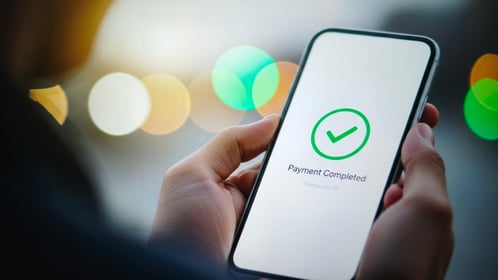 or redeeming an offer. Whatever the first meaningful step looks like in your business, that's the clock you're watching. Those who never take it at all are already on an exit trajectory. First engagement timing is a proxy for whether the initial motivation that drove someone to join or buy is still active, or whether life moved on before your program got a chance to matter.
Track it by: monitoring the time between registration or first purchase and the first meaningful platform action, flagging anyone who hasn't taken that action within your defined window.
Inspire it by: sending a single, specific nudge within the first 48 hours that makes the next step obvious: one action, one link, one reason to click.
2. Early benefit or product use
Did the customer use anything in the first weeks? This is the single most predictive behavior for most businesses. Customers who experience real value early like a discount that saved them money, a product that worked as promised, or a service that made something easier are far more likely to come back. Those who don't experience early value frequently don't come back at all.
Track it by: separating your "registered" or "purchased" metric from your "first use" metric and treating the gap between them as your single most important activation number.
Inspire it by: surfacing the easiest, highest-value benefit front and center in your onboarding flow. Don’t emphasize the entire menu of everything available, or offer low-value rewards that take far too long to earn enough for redemption.
3. Response to early communications
Did the customer open the welcome email? Click anything? Respond to a check-in? Communication engagement in the post-purchase window is a useful proxy for overall investment in the relationship. This signal matters because it's actionable early. If you can see within the first two weeks that a cohort of new customers isn't engaging with onboarding communications, you try a different channel, different message, or more specific offer while their attention is still potentially available.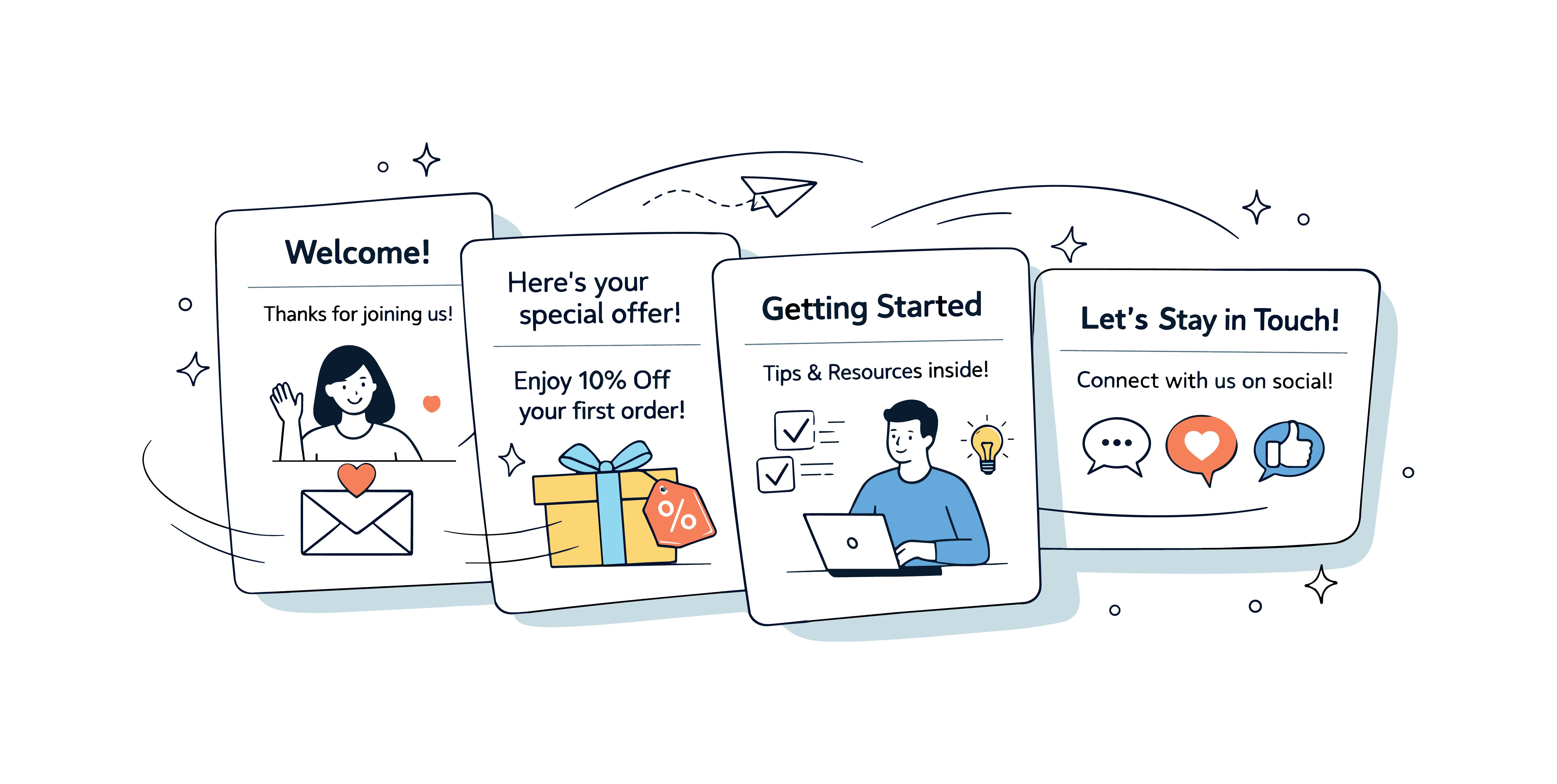
Track it by: monitoring open and click rates on your welcome series by cohort, not just in aggregate.
Inspire it by: leading your earliest messages with something the customer actually wants. The top communications desired by customers are: a discount for next purchase (49%), a thank you (42%), examples of how others are using the product/service (25%), and personalized recommendations (23%).1
4. Review, rating, or feedback response
Did the customer say anything about their experience in a review, a survey response, or a star rating? This behavior is easy to overlook because it doesn't feel like a purchase signal. It is. A customer who takes the time to rate a product, complete a satisfaction survey, or leave a review has done something important: they've re-engaged with the brand after the transaction closed. They're not just buyers who moved on. They're someone who formed an opinion worth sharing.
Track it by: measuring response rate to your post-purchase feedback requests as a standalone metric, and cross-referencing non-responders against your broader churn data to see how reliably silence predicts exit.
Inspire it by: timing your feedback request to arrive after the customer has had a genuine chance to experience value (not immediately after purchase.)
5. Repeat engagement pattern
Did the customer come back? Not once, but repeatedly. Post-purchase behavior of consumers in loyalty and membership contexts follows a predictable early pattern: a customer who returns within a short window of their first use is far more likely to develop a habit than one who waits weeks for their second visit.
Habit formation requires repetition, and early repetition matters most. A member who redeems two offers in the first month is a different prospect than one who redeemed one offer eight months ago.
Track it by: measuring time-to-second-action and time-to-third-action, etc. Shorter gaps are better predictors of habit formation, a precursor to loyalty.
Inspire it by: following up immediately after the first use with a relevant, low-friction next step to shorten the time until the next use. Studies show that it gets easier to inspire future purchases and renewals as habits form, so work for some early wins. [4]
Designing a Post-Purchase Funnel To Encourage Desired Behaviors
Knowing the five signals matters only if you have a system that acts on them while the window is open. A post-purchase funnel is a system that helps deepen your relationship with your customers one phase at a time.
Phase 1: Confirm - Reassure the member they made the right decision.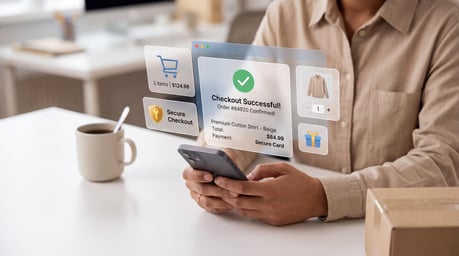
- Send an immediate order or welcome confirmation with clear next steps
- Restate the value they're about to receive (not what you offer, but what they get)
- Make it easy to reach support if anything feels off
Phase 2: Activate - Get them to take a meaningful next step (even a small one) right away.
- Send a single, specific call to action
- Surface the easiest or highest-value benefit first (the obvious first win)
- Remove every obstacle between them and the first meaningful action
Phase 3: Engage - Develop consistent member habits by rewarding repetition of behaviors.
- Follow up after first use with a relevant next step while momentum is fresh
- Show progress via points balance, tier status, streak, profile completion
- Reward the second and third interaction, not just the first
Phase 4: Commit - Make choosing you again feel like the obvious choice.
- Recognize loyalty explicitly by acknowledging milestones, anniversaries, streaks
- Personalize offers based on actual behavior, not just demographic segment
- Make renewal, repurchase, or re-engagement as frictionless as possible
These four phases provide a solid foundation, but there are additional ways to strengthen every stage of your post-purchase funnel to encourage more repeat purchases and higher customer lifetime value.
Encourage Post-Purchase Behavior That Matters Starting Today
Post-purchase behavior isn't mysterious (though customer mentality might still be). By identifying, and then encouraging key behaviors, you can develop long and profitable relationships with your members.
One of the most reliable ways to drive those early behaviors is also one of the simplest: give your customers something genuinely valuable to engage with. Discounts and loyalty programs are particularly effective here because they make the first win obvious and tangible. While both tactics can increase repeat purchases, understanding whether loyalty programs or post-purchase upsells create stronger long-term value can help you invest in the retention strategy that best fits your business model.

Endnotes / Resources
- Narvar. 2025 State of Post-Purchase Report.
- Gorgias. The CX-Driven Growth Playbook: Why Happy Customers Are the Best Fuel for Growth.
- BS&Co. Repeat Purchase Rate Benchmarks: 18.8% Across 156K Customers.
- ASAE. Three Keys to Solving the Member Retention Puzzle.
- Radial. Nearly 80% of Consumers Won't Buy Again After a Bad Post-Purchase Experience.
- TechClass. What Is Customer Training? Definition and Why It Matters.
Topics: Customer Engagement, Discount Programs, ecommerce, customer retention, customer loyalty, loyalty programs

.jpg)
.jpeg)



Share your Comment.