
 Janaan Weaver
Open your wallet. Not the digital one, the physical one.
Most of us are carrying around three or four loyalty program cards we joined and then completely forgot about. The local coffee shop punch card. The grocery store one you scan at checkout. The one from a sandwich chain you went to twice. A car wash membership you're still being charged for. We signed up at a register because someone asked. We got an email confirming we had 40 points. We have not thought about it since.
That is the real state of customer loyalty. It's not disloyalty exactly.... Just indifference. Or forgetfulness. Roughly 91% of American retail businesses run some kind of loyalty or engagement program and about three quarters of consumers do not identify as loyal to any particular brand So nearly everyone is running a program. Almost nobody is winning undying loyalty with it.
This guide covers what actually builds customer loyalty, how the program models compare on cost and speed, and why the instant discount model solves a problem that points programs have never quite fixed.
Key takeaways
- Loyalty is what people do, not what they say on a survey.
- Most programs fail because members wait too long to get anything, not because the rewards are too small.
- Points cost more than they look. You owe them until they're redeemed, and the ones that expire represent members who got nothing.
- Instant discounts skip the wait. Value arrives on the first purchase, with nothing to accrue and nothing to expire.
- Merchant funding is how you offer real savings without paying for them yourself.
- Find where members drop off before you pick a program. Different leaks need different fixes.

Defining customer loyalty
Ask ten marketers to define customer loyalty and you will get ten answers. Some say frequency. Some say exclusivity, as in the customer only buys from you and nobody else. Some say advocacy, ya know, the person who tells their whole group chat about you They are all partly right, which is part of the problem. A definition that flexible is not a real definition.
Here is the version you should care about: Customer loyalty is the consistent, repeated choice of your brand when a similar alternative exists. The key phrase is "when a similar alternative exists." A customer who stays just because switching is a nightmare, is not loyal. Those are just customers that are stuck. Those two things look identical on a retention dashboard and behave very differently the moment a competitor removes the friction.
 It also helps to separate the two kinds. Transactional loyalty is the member who stays for the value of your benefits. Emotional loyalty is the member who stays because of a genuine connection to your brand . Emotional loyalty is stronger but slower to build. Transactional loyalty is faster to build and more honest about what it is.
The mistake is treating these as a hierarchy where transactional loyalty is the cheap seats. It is not. Transactional loyalty is where almost every emotional relationship starts. Nobody falls in love with a brand before they have gotten any value out of it.
What customer loyalty is not: a number on a satisfaction survey. People will tell you they love you and then quietly stop showing up. Roughly 73% of consumers say they will switch brands after a single bad experience . And depending on which study you believe, and what industry you're in, acquiring a new customer is anywhere from five to 25 times more expensive than retaining an existing one.¹ Survey answers are polite. Purchase history is not. Trust the behavior.
Customer loyalty strategies that hold up
Most customer loyalty strategies' content is a list of 25 tactics. You do not need 25. You need four that move behavior and then the discipline to actually run them.
Earn the second purchase! The gap between a first purchase and a second one is the single widest leak in most businesses. According to Bain & Company, a 5% increase in customer retention can produce more than a 25% increase in profit.² But almost all the budget goes to the prospect. Build something for the window of time right after the first transaction, because that is when the relationship is either formed or forgotten.
Shorten the distance! This is the one almost everyone gets wrong. A member who has not received anything from your program within their first week is mostly a lead, not a member. With people paying for premium loyalty tiers, about 72% expect to see benefits immediately or within that first week (Make value visible! Points programs hide value behind a threshold. The member has to imagine the reward, do mental math, and trust you to still be running the program when they get there. That is three separate asks. A program where the value is legible at the moment of decision asks for none of them.
Recognize, do not just reward! Rewards are transactional and easy to copy. Recognition is specific to the person and much harder to replicate. A birthday perk is a reward. Remembering what someone actually orders is recognition. The second one costs less and lands harder.
Customer loyalty programs: the models compared
This is where the decision actually gets made, and where most organizations pick a model because it is the one they have seen rather than the one that fits.
There are four customer loyalty program models worth serious consideration.
Points and tiers
The default. Members earn a currency on spend and trade it for rewards, usually with tiers layered on top for status.
How it works for you: familiar to members, good data, and tiers create a pull toward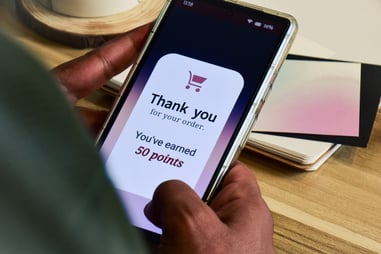 higher spend.
What it costs: more than the spreadsheet says. You carry points liability. You need a rewards catalog, a redemption engine, tier logic, and someone to run all of it.
How fast members see value: slowly. This is the model's biggest weakness.
Where it breaks: unredeemed points are dead weight, representing lost value for the member and missed engagement for you. Points models also require sustained and high-volume spending to pay off. Plenty of members decide the reward is not worth the effort and stop participating, without ever telling you.
Cash back
Members earn a percentage of spend back as cash or credit.
How it works for you: cash is universally understood. No education required, no catalog to curate. Many cash back providers use merchant-funded rewards, which means the merchant covers the reward rather than you.
What it costs: less than points if it is merchant-funded but more if it is not.
How fast members see value: faster than points, but still usually a statement cycle behind.
Where it breaks: cash back is easy to match. Whoever offers 3% wins until someone else offers 4%.
Paid or premium membership
Members pay for a better tier of benefits.
How it works for you: you get paid up front and the people who pay actually use it. Around 81% of members of free programs say they would actually pay for a premium tier at a favorite retailer if the benefits were actually worth it.
What it costs: the benefits have to be real. Paid members are the least forgiving audience you will ever have.
How fast members see value: usually immediate.
Where it breaks: the moment the perceived value dips below the fee. Then you are not losing a member, you are processing a cancellation with a refund.
The economics can look very different depending on whether members pay for access or receive benefits at no cost.
Instant discount + private access
Members get immediate, exclusive savings at a network of merchants.
How it works for you: value lands on the member's first use. Typically merchant-funded, so you are not writing the checks.
What it costs: substantially less than points, because there is no liability to carry and no catalog to maintain.
How fast members see value: the first transaction.
Where it breaks: network breadth. A discount program your members cannot use where they actually shop is worse than no program, because it promises and then does not deliver.
More about the instant discount reward model
Here is the argument for this model in one sentence: it removes the gap between joining and benefiting, and that gap is where most loyalty programs die.
.jpeg?width=398&height=222&name=AdobeStock_2084694440%20(1).jpeg) Consider what a points member has to do. Join. Spend. Spend again. Track a balance. Remember the program exists. Reach a threshold. Navigate a redemption process. Receive something. That is seven steps between signup and satisfaction, and the member can drop out at any one of them.
Consider what a points member has to do. Join. Spend. Spend again. Track a balance. Remember the program exists. Reach a threshold. Navigate a redemption process. Receive something. That is seven steps between signup and satisfaction, and the member can drop out at any one of them.
An instant discount member does this: join > save money. Boom.
When consumers are asked what would make a premium membership worth paying for, instant discounts land near the top, behind free shipping but ahead of surprise rewards, holiday discounts, and exclusive deals. Older loyalty research reached the same conclusion, finding that among all program types designed to move consumer loyalty, discount-based programs performed best, and instant discounts best of all.
The economics are different, not just the experience
In a member-funded model, the program provider recovers its costs from the members themselves. That puts a limit how much value the program can deliver, and it shows. Average discounts land somewhere in the 4% to 12% range per transaction, and redemption thresholds can climb as high as $1,000 in total purchases before a member can cash anything out. Those programs tend to go unused and then get forgotten, which is a predictable result of asking members to pay for their own rewards.
In a merchant-funded model, the merchant absorbs the discount because the program is delivering them customers. Nobody is subsidizing anybody. The merchant gets incremental traffic, the member gets real savings, and the sponsoring organization gets the loyalty benefit without funding the rewards .
That difference is what lets an instant discount program offer depth that a self-funded points program cannot match without eating the margin.
No points liability, no problem
Points are a liability. You owe them. They sit on the books until redeemed or expired, and if your program grows faster than your redemption rate, congratulations, your success is now a balance sheet problem.
Then there's breakage, the industry term for rewards that get issued and never used. McKinsey's research on loyalty economics found that breakage represents lost business opportunity, not free money.³ Rewards or points that expire unused look like free money and finance teams have been known to treat them that way. But they are not free. They are a record of members who engaged with your program, got nothing, and formed probably a negative opinion about it.
Instant discounts have neither problem. No liability, no breakage.
The value comes at the point of sale. Nothing accrues, so nothing expires, and there is no liability to account for.
The difference between a good instant discount program and a bad one
 In-store coverage. The majority of everyday spending still happens at physical locations. Grocery stores, fast food, etc. A program built mostly on online-only merchants misses where members actually spend their money.
Mobile redemption at the moment of decision. Offers need to be accessible while the member is standing in the store, not after they get home and log into their laptop.
Redemption in as few steps as possible. Coupon printing, multi-step verification, separate app downloads. Every additional step makes you lose members. The easier the path from finding an offer to using it, the higher the utilization
B2B customer loyalty programs
B2B customer loyalty programs don't get as much attention as consumer loyalty, which is strange, because the returns are better. Companies running effective B2B programs see about 13% better retention than competitors, and their members are roughly 70% more likely to refer someone.
The best programs are simpler than you'd think. Not points and tiers, but private discounts, members-only pricing, and better travel rates, paid for by merchants instead of by you. Easy to use means people actually use it.
We have covered this ground in more depth elsewhere. If B2B is your focus, start with our breakdown of whether B2B loyalty programs are worth it and our guide to launching a white label B2B reward program.
Ecommerce customer loyalty
Ecommerce customer loyalty has a specific version of the same problem: most brands treat the checked-out order as the finish line when it is closer to a starting line.
The post-purchase window is the strongest moment you will ever have with a customer. They have just decided to trust you and give you their hard-earned money. They are engaged, they are opening your emails. And in most ecommerce operations, that window gets filled with a shipping confirmation and then...nothing.
Loyalty programs work in ecommerce by pulling three levers at once:
- Purchase frequency: How often someone buys from you.
- Average order value: How much they spend each time.
- Customer lifespan: How long they keep buying before they stop buying.
Winning at ecommerce loyalty is about how fast members get something, not how much they get eventually.
For a deeper look, see our roundup of successful ecommerce loyalty programs and how to use a post-purchase engagement platform to increase lifetime value.
How to improve customer loyalty
If you're wondering how to improve customer loyalty, start by finding where members quit, not by adding more rewards.
Find the leak. Are people dropping off before they ever use the program? Between the first and second purchase? At renewal? Different leaks have different fixes.
Watch what they do, not what they say. How often does a member come back, how recently, and how many members have never used the program.
Fix the leak you actually have. If people quit before using it, they had to wait too long for your program to provide them with something good. If they quit at renewal, they forgot what they were paying for. If they leave for a cheaper option, you need more value (which is what merchant funding buys you.)
Examples from other brands can make these retention principles easier to put into practice. These customer retention examples show how businesses use different strategies to keep customers engaged and encourage them to return.
Then keep running it. Most programs get launched and then abandoned. People need reminding the benefit exists. Remind them.
Building customer loyalty: where to go from here
Building customer loyalty comes down to giving people something good, quickly. Then doing it again next month and the month after.
At Access Development, we build discount and loyalty programs on a network of more than 1 million locations, so members get meaningful savings on spending they were already planning to do, and organizations do not fund the rewards themselves. If you are weighing your options, let's talk.
And if retention is the specific problem you are trying to solve, our Customer Retention Playbook is the companion piece to this one, covering how to keep the members you already have.

Endnotes/Resources
Topics: Customer Engagement, Discount Programs, ecommerce, customer retention, customer loyalty, loyalty programs

.jpg)
.jpeg)
Share your Comment.