 Ashley Autry
Most ecommerce brands treat “place order” as the finish line, but it's actually the starting line.
The bulk of marketing budgets typically go toward acquiring new customers, and once the sale is made, the experience often drops off a cliff. Confirmation email, shipping notification, maybe a generic 'thanks for your order,' and then silence. That gap between purchase and next interaction is where customers drift away, forget your brand, or worse, find a competitor who makes them feel valued.
A post-purchase engagement platform is designed to close that gap. It's the infrastructure that keeps customers connected to your brand after the transaction is done through personalized communication, loyalty incentives, relevant recommendations, and experiences that make them want to come back. And when it's done right, it's one of the most cost-effective ways to grow for ecommerce businesses today.
Key Takeaways:
- The post-purchase window is one of the best opportunities you have in the entire customer lifecycle.
- Retained customers are cheaper to keep, spend more, refer more, and stick around longer.
- A post-purchase engagement platform goes beyond the inbox and is everything you need to turn a first purchase into a long-term relationship.
- Customer lifetime value grows when post-purchase touchpoints are consistent, timely, and relevant.
- Loyalty programs tied to post-purchase behavior outperform standalone loyalty apps.
- Ecommerce brands that invest in post-purchase experience see reduced churn.

Why the Post-Purchase Gap Is Costing You
If your marketing strategy stops at conversion, you're leaving a lot of revenue on the table. Bain & Company puts a number on it: a 5% increase in customer retention can boost profits anywhere from 25% to 95%.1
Most ecommerce brands are built around acquisition. Teams are measured on CAC, ROAS, and new customer growth. The ecommerce post-purchase experience too often becomes an afterthought, even though the same behavioral signals that predict a member renewing or quietly disappearing tend to show up long before a subscriber ever churns.
Meanwhile, churn keeps getting bigger. Customers who had a fine-but-forgettable experience don't actively dislike you, they just stop. And they're probably not coming back unless something pulls them in.
Studies show that acquiring a new customer typically costs 5 to 10 times more than retaining an existing one, though the ratio can range from 3x to 25x depending on your industry, business model, and price point.2 Factor in lifetime spend, referral potential, and lower service costs for loyal customers, and the math becomes impossible to ignore.
What Is a Post-Purchase Experience Platform: How Is It Different?
A post-purchase experience platform is an integrated system built specifically to manage and personalize the customer journey after a purchase has been made.
It's basically the glue holding your storefront, customer data, and everything that happens after checkout together such as delivery updates, product onboarding, reorder reminders, loyalty rewards, review requests, referral campaigns, and more.
Here's what separates it from a standard ESP or CRM: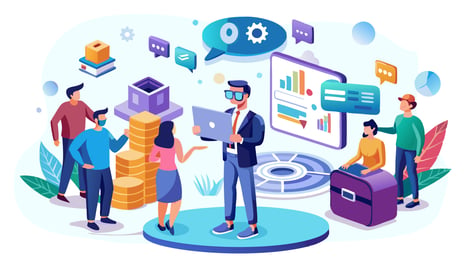
- Triggers based on what customers actually do, not just what group they're sorted into
- Personalization that adjusts to real behavior, like what they bought, when, and how often
- Journey-aware messaging that knows whether someone's a new customer, a regular, or at risk of leaving
- Loyalty rewards for actions, not just spending (i.e. referrals, reviews, or repeat visits, not just hitting a dollar amount)
Driving Customer Lifetime Value with Smarter Engagement
Customer lifetime value (CLV) is one of the most important metrics for sustainable ecommerce growth, and the post-purchase window is where it's built or broken.
The formula is straightforward: the more often a customer buys, the more they spend per transaction, and the longer they stay, the higher their CLV. A post-purchase engagement platform directly influences all three variables, which is why teams focused on optimizing the post-purchase funnel tend to see repeat revenue climb well past what acquisition spend alone could produce.
Take the repurchase rate as an example. According to Shopify research, repeat customers generate significantly more revenue per year than first-time buyers and are far more likely to try new products.3
Ecommerce customer value is also heavily influenced by personalization. When brands send relevant recommendations based on past purchases rather than generic promotions, follow-up communication converts at a much higher rate. Epsilon found 80% of consumers are more likely to buy when brands get this right.4 A post-purchase engagement platform gives you the infrastructure to make that personalization happen at scale.
Building Post-Purchase Loyalty That Sticks
There's a meaningful difference between a loyalty program and real post-purchase loyalty. One is a points system. The other is a relationship.
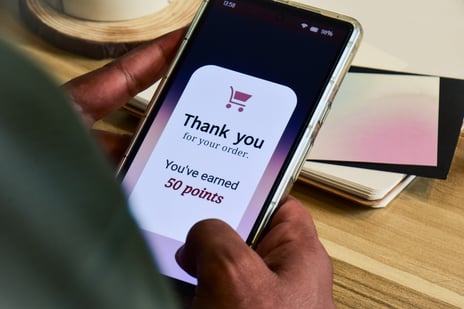 Loyalty programs alone don't retain customers, the experience surrounding them does. When a customer feels seen after a purchase, it shows up in small ways: a timely thank-you, a helpful tip for using what they just bought, a reward that makes sense for their specific purchase. That's when the emotional connection to your brand deepens.
Research from Bond Brand Loyalty found that 85% of consumers are more likely to continue doing business with a brand if they have a loyalty program, with 73% spending more as a result.5 But the engagement that reinforces that loyalty has to start immediately after purchase, while the customer's attention and satisfaction are at their peak.
I order a specific skincare product roughly every six months, and instead of just auto-charging me on a schedule, the brand has an assigned rep text me first to check if I'm ready for a refill or want to push it back. More often than not, I still had product left and appreciated not being charged for something I didn't need yet. One time there was a mix-up and they sent a set after I'd already asked to postpone. I called to flag it, fully expecting a return process, and they just told me to keep it, no charge. That one interaction made me feel like an actual person to them, not just an order number.
The Ecommerce Post-Purchase Engagement Platform Experience Your Customers Expect
Customer expectations have shifted quite a bit. The bar for an acceptable ecommerce post-purchase experience is no longer "did my package arrive?" It's "did this brand make me feel like they cared about more than just my credit card?"
That expectation gap is a real business risk. A PwC study found that more than half of consumers (52%) say they stopped using or buying from a brand because they had a bad experience with its products or services, while nearly a third (29%) stopped due to poor customer experience.6 In ecommerce, a disappointing post-purchase experience like a delayed shipment with no communication, a generic email that ignores purchase history, or no follow-up at all, can be that breaking point.
The brands winning at retention are investing in the full post-purchase infrastructure: proactive shipping updates, easy returns with empathetic messaging, personalized content that helps customers get more value from what they bought, and loyalty touchpoints that feel earned rather than transactional.
Every interaction shapes how customers perceive your brand after checkout. Understanding the post-purchase evaluation process helps businesses deliver the right experience at every stage and reduce the risk of losing customers.
What Retention-First Brands Are Seeing
A post-purchase platform isn't just there to stop people from leaving. It's there to help you grow faster.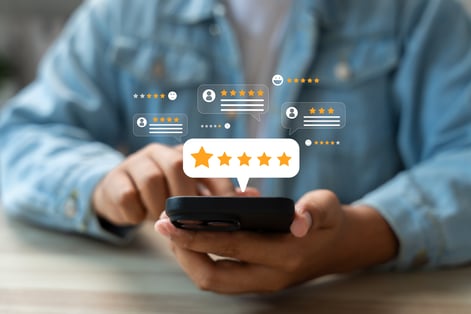
The probability of selling to an existing customer is 60–70%, compared to just 5–20% for a new prospect.7 When you combine that higher conversion rate with lower CAC, increased average order value, and the referral multiplier that loyal customers create, the ROI of post-purchase engagement becomes hard to argue with. If you're building this out end-to-end, a complete playbook for post-purchase retention is a good next step for mapping the full journey.
Retention-focused brands tend to see more stable revenue, are less rattled when paid acquisition costs jump, and end up with customers who talk them up without being asked. Word-of-mouth from satisfied, engaged customers remains one of the most cost-effective acquisition channels in ecommerce.
Treat the purchase as the beginning of the relationship, not the end of it. Give customers a reason to come back. Make it easy, make it personal, and trust that the rest takes care of itself.
Ready to Think Through Your Post-Purchase Strategy?
Thinking about where your own customer experience might have gaps, or what a stronger post-purchase strategy could look like? At Access Development, we tackle this kind of thing all the time, and we've learned there's no single playbook. Every customer base is different. Contact us and let's talk through what could work for yours.

Endnotes/Resources
- Bain & Company. Retaining Customers Is the Real Challenge.
- Churnkey. Customer Acquisition vs. Retention: Cost Comparison Guide.
- Shopify. Grow Repeat Sales With Customer Retention in Retail.
- Epsilon. New Epsilon Research Indicates 80% of Consumers Are More Likely to Make a Purchase When Brands Offer Personalized Experiences.
- Bond Brand Loyalty. The Bond Loyalty Report 2026: Loyalty Decoded.
- PwC. The Loyalty Illusion: Why Companies Think They're Winning When Customers Are Walking Away.
- Pearson. Marketing Metrics: The Definitive Guide to Measuring Marketing Performance.
Topics: Customer Engagement, Discount Programs, ecommerce, customer retention, customer loyalty, loyalty programs

.jpg)
.jpeg)




Share your Comment.