 Ryan Marvel
Every brand puts loyalty program sign-ups in the board deck. Almost nobody puts redemption rate on the same slide.
That's a problem, because enrollment is the easiest number in ecommerce customer loyalty to move and the least predictive of anything that follows. Measuring a loyalty program by sign-ups is like measuring a gym by memberships sold. The January spreadsheet looks incredible. The treadmills sit empty.
Most shoppers carry more loyalty memberships than they actually use. That gap isn’t a design flaw in any single program. It’s what happens when the reward arrives long after the purchase did.
Key Takeaways
- The average consumer belongs to eight loyalty programs and actively uses only five.
- Two in five loyalty members admit they sometimes forget to redeem what they've already earned.
- Half of paid-program cancellations happen in the first year, and the most common reason is that members never used the benefits enough to justify the cost.
- Retention across retail verticals averages 27.4%, but once a shopper buys a second time, a third purchase becomes 95% more likely.
- Instant, everyday discounts land value before a member has earned anything, which is the part deferred points can't do.

Ecommerce Customer Loyalty Has an Engagement Problem, Not an Enrollment Problem
Sign-up rates are, broadly, fine. People join things. According to Deloitte’s 2025 Consumer Loyalty Program Survey, the average consumer belongs to eight loyalty programs but actively participates in only five.1 The same survey of 5,564 US loyalty members found 72% say programs make them more likely to spend with a preferred brand, and 80% feel they get more from the brand as a result.1
Then the numbers thin out. Only 56% actually increase their spend, and that’s with the program they like best. And in any given industry, 51% of members engage with just one program, meaning the second, third, and fourth cards in the wallet are mostly decorative.1
Most customer loyalty programs are built and measured as if the hard part were getting people in the door. It isn't. The successful e-commerce loyalty programs tend to focus on what comes after. The hard part is the six months after, when a member has an account, a balance of 340 points, and no particular reason to think about you on a Tuesday.
Why Deferred Rewards Leak Value
Start with the most damning number in the Deloitte data: 40% of respondents admit to sometimes forgetting to redeem.1 Two in five members have earned something and left it on the table. That's not apathy toward your brand. It's what deferral does to attention.
The pattern shows up in paid programs too. McKinsey's much-cited 2020 paid-loyalty research found that 50% of cancellations occur within the first year of membership, and that the most frequent reason consumers gave was "not using the benefits enough" to justify what they were paying.2 It's a 2020 study, so treat the specific percentages as directional rather than current. The mechanism has not aged.
To be fair to points: plenty of programs run them well, and the argument here isn’t that points are worthless. It's that points are a perfectly good mechanic bolted to the wrong sequence. Earn first, wait, maybe redeem. Every step in that chain is a place for a member to quietly stop caring.
What "Instant" Actually Means in an Instant Discount Program
An instant discount program flips the order. The member gets usable value at sign-up, not at the fifth purchase. That simple shift sits at the center of the instant discount model and the customer loyalty strategies built around it.
McKinsey's framing of what makes paid loyalty work is useful here even outside a paid context: benefits should be usable immediately upon subscribing, and consumers expect at least a 150% return on any fee they pay.2 Immediacy is doing real work in that sentence. A benefit you can use tonight gets tested tonight, and a benefit that gets tested becomes a habitOne honest caveat from the same research: McKinsey found that hard-value benefits like discounts are what get people to sign up, while brand affinity and experiential perks do more of the work at renewal.2 Discounts alone won’t carry a program. But McKinsey’s own prescription for early cancellations is “everyday discounts” and frequent touchpoints that keep the program top of mind, which is exactly the gap this post is about.2
Practically, that means a member should be able to answer "what do I get?" with something concrete on day one, and should keep encountering that answer between purchases, not only inside your checkout flow.
The Retention Math for DTC Customer Loyalty
DTC customer loyalty lives or dies on the second purchase. Shopify, citing Bluecore's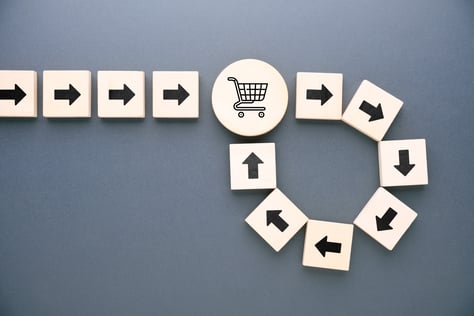 benchmark data, puts average retention across seven retail verticals at 27.4%, with jewelry at the low end at 19.1% and health and beauty at the high end at 41.2%.3
Here's the leverage: once someone buys twice, they're "95% more likely to buy again."3 The second purchase isn't one incremental order. It's the gate to everything after it, and a big part of how much ecommerce brands can save from loyalty programs over time.
Which reframes the whole exercise. You are not trying to build a decade-long relationship out of a first order. You are trying to earn one more purchase, quickly, from someone who has already given you their email address and their credit card. Everything after that gets easier and materially cheaper than going back to the auction for another cold click The catch is timing. The second order rarely happens the same week as the first. It happens weeks or months later, and only if your brand is still on the shopper’s mind when the need comes back around. Whatever earns that second purchase has to work during the gap, not just at checkout.
What Shoppers Say Actually Brings Them Back
Ask shoppers directly and they're not coy about it. Attentive’s 2026 loyalty and retention report, as summarized by Shopify, found that 52% named deals and promotions as a top reason to return to a brand they'd recently tried, 38% named fast or free shipping, and 18% named exclusive loyalty offers.3
A 2025 Shopify and Sapio Research holiday survey found something similar: 49% cited discounts as a loyalty driver, while 29% cited loyalty programs themselves.3
Read those together and a useful distinction appears. Shoppers rate the savings higher than they rate the program. Ecommerce loyalty rewards that feel like a discount get credit; the same value routed through a points ledger often doesn't. Self-reported preference isn't the same as behavior, so don't over-read it. But when the stated preference and the redemption data point the same direction, it's worth listening.
How Do You Measure Whether a Loyalty Program Is Working?
Two numbers, neither of them enrollment. First, redemption rate: what share of members have actually used a benefit in the last 90 days? Second, second-purchase rate within 90 days of the first order. With those two in hand, you can begin to measure the revenue impact of a customer loyalty platform with real confidence. Enrollment tells you your sign-up form works. Redemption tells you the program works. If redemption is flat while sign-ups climb, you’re building a mailing list, not a loyalty program.
Are Discounts Bad for Brand Equity?
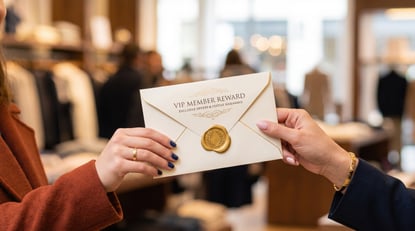 Sometimes, yes. This objection is real. Public, sitewide markdowns train shoppers to wait, and they reset the price anchor for everyone, members included. Margin pressure is the honest cost of any discount strategy.
Private, member-only pricing behaves differently, because it's gated. The value is conditional on belonging, and your public price stays where you set it. That's a meaningful structural difference, though it isn't a free pass. Discount depth and frequency still need discipline. Discounts that live outside your catalog avoid the problem altogether. A member who saves on lunch or an oil change through your program never sees your own price move.
Building Benefits People Actually Use
The fix for a benefit nobody uses is rarely a bigger benefit. It’s a broader one. Instant solves the first problem: value lands before the member has earned anything. Broad solves the second: the member has a reason to use it before they need you again.
A discount that applies only to your catalog can only be used when someone is already shopping your catalog, which is exactly when you least need to persuade them. A discount that applies to lunch, an oil change, a movie, or a hotel gets used on Tuesday and keeps your program in front of the member during the long stretch between orders. Every use is a small reminder that belonging pays, and that stretch is exactly where the second purchase is won or lost.
That's the thinking behind what we do at Access Development. We run America's largest private discount network: more than 1 million discounts across 1.5 million-plus in-store locations, with typical savings around 25% per offer versus roughly 8% on the public affiliate offers most programs stitch together. Ninety-nine percent of our merchants offer in-store discounts, which matters because most household spending still happens somewhere with a door.
The Bottom Line
Loyalty doesn't usually break at the sign-up form. It breaks in the gap between earning and getting, where 40% of members forget to redeem and first-year cancellations pile up. Points aren't the enemy. Waiting is. Put usable value in front of a member early and often, and the program starts doing the job you bought it for. For more ideas on building loyalty beyond the first purchase, explore our customer retention playbook with proven strategies, formulas, and frameworks.
If part of your plan involves giving members a benefit they’ll actually use between purchases, that’s the problem Access Development has spent 40+ years solving. Our private discount network spans 1M+ locations and 850,000+ hotels worldwide. Let’s talk through what it could look like for your members.

Endnotes/Resources
Topics: Customer Engagement, Discount Programs, ecommerce, customer retention, customer loyalty, loyalty programs


Share your Comment.