
 Kendra Lusty
As a small business owner, competing for customer attention can feel like facing off against Goliath.
The big brands have the budgets, the in-house tech teams, and the infrastructure to build loyalty programs that keep customers coming back week after week. How is a small business with a small budget supposed to compete?
Here's the plot twist: David now has access to Goliath's arsenal.
Modern loyalty programs aren't something you build anymore — they're something you tap into. These expansive, ready-built benefits deliver real, everyday value. Plus, they're fully customizable and surprisingly easy to implement.
Best of all, any business of any size can use modern loyalty programs to deepen member relationships, which in turn drive engagement, retention, and referrals.
Key takeaways:
- Small businesses now have access to the same loyalty infrastructure as big brands.
- The technology levels the playing field; your relationships win the game.
- The best loyalty programs keep customers thinking about you between visits.
- A loyalty program isn't a promotion. It gets more powerful every month it runs.
- Most of your competitors still aren't doing this well. The window is open.
Benefits of Loyalty Programs for Small Businesses
Loyalty programs are essential tools for small businesses. They help turn customers into loyal members who return over and over again. This repeat business can significantly increase revenue over time.
Small businesses often face stiff competition, both from other small businesses and from giant corporations. A strong small business loyalty program can be a key differentiator. By offering unique rewards, businesses can stand out in a crowded market.
These programs also enhance customer relationships. They show appreciation, making customers feel valued and engaged. Personalized rewards can even boost customer satisfaction and retention.
Additionally, loyalty programs provide valuable data. They reveal insights into purchasing behaviors and preferences, guiding marketing efforts.
Consider these benefits of loyalty programs for small businesses:
- Increase in repeat customers
- Enhanced customer satisfaction and brand loyalty
- Valuable insights for tailored marketing
Moreover, loyalty programs can create a sense of community. Customers become part of a brand's inner circle, fostering loyalty.

Loyalty Programs for Small Businesses: From Limited Options to Unlimited Potential
For years, meaningful loyalty programs were simply out of reach for small businesses. Big brands with massive budgets and in-house tech teams had a monopoly on the most powerful loyalty programs.
Small businesses were limited to programs they could implement with smaller budgets and limited resources. These types of programs each have their strengths, encouraging positive interaction with members. For example:
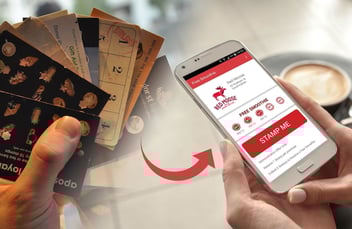
- Punch cards (buy 10, get 1 free) can encourage repeat visits.
- Social check-in discounts (10% off for a 5-star review) can encourage product/service reviews.
- Simple email or SMS blasts (sign up for periodic deals) can encourage limited data sharing.
- Referral cards (give this to a friend, you both get a discount) can encourage member referrals.
However, each has distinct limits.1 For example, each is simple enough, any competitor could copy it in an afternoon, dipping into your advantage. Also, none of them capture meaningful data or build meaningful habits. Most especially, none of them help make your members feel genuinely valued between visits.
Historically, other options have been simply out of their price range. Building a proprietary points platform, for example, required development resources most small businesses didn't have. White-label tools that existed were often clunky, limited in what they offered members, and still required significant time and expertise to manage. The ROI was uncertain at best.
New modern loyalty program options are changing the game. Businesses that recognize it first are pulling ahead of the competition both big and small.
What Changed: How Plug-In Loyalty Infrastructure Unlocked the Real Benefits of Loyalty Programs for Small Businesses
Modern loyalty programs use cumulative buying power of many businesses (and all their customers) to build loyalty programs that offer exceptional value at a small price tag.
Here’s how it works (using member discount programs as an example.)
Modern loyalty platforms come pre-loaded with value. We're talking hundreds of thousands of deals across dining, retail, entertainment, health and wellness, and especially travel — including hotels, flights, car rentals, and theme parks at prices that beat what your members could find on Expedia or Priceline on their own. The network is already built. The deals are already negotiated. The technology is already running.
All a small business has to add is its own brand, its customer relationships, and its local community knowledge. The platform provides everything else. As a bonus, organizations that used managed loyalty services saw a 25% reduction in time-to-market for new loyalty initiatives.2
Here's what this looks like in practice:
- A local fitness studio can offer members health food discounts, athletic gear savings, wellness service deals, and deeply discounted travel — all under its own brand.
- A regional professional association can give members a benefit they actually use every single day, not just when they attend a conference.
- A specialty retailer can offer a membership program that competes on everyday value, not just on in-store promotions.
This isn't about small businesses trying harder at loyalty. It's about small businesses finally having access to the same infrastructure that made loyalty work for big brands in the first place.
The Small Business Superpower That Big Brands Still Can't Buy
Small businesses have a special ability to connect with members. Add a powerful loyalty program on top of that, and small businesses can combine strengths in a way big brands never can.
Big brands have access to these same deal networks. They have more marketing spend, more engineers, and more data. However, there's one thing they can't manufacture: genuine human relationships.
Local businesses commonly add the personal touch that a national chain simply cannot. A fitness instructor notices you've been gone for three weeks and sends a personal check-in. A boutique owner who calls when something comes in that's exactly your style. An association manager knows which members are celebrating milestones and reaches out like it matters.
Those moments of genuine connection are not a marketing strategy; they're a competitive moat.3 When customers feel valued, appreciated and respected, they are more likely to give their loyalty.4 When you pair them with a program that delivers real, everyday value, you create something that is both practically useful and emotionally meaningful to your members.

What to Look for in Loyalty Program Software for Small Businesses
Not all platforms are created equal. Not all platform providers are partners in your success. When evaluating loyalty program software for small businesses, here's what actually matters, and why each item is important.
The quality of the benefit network. How many deals are available? How meaningful are the discounts? Does the travel component offer genuinely better pricing than public booking sites?
White label capability. When your site and marketing are framed with your logo, members are continually reminded that the benefit comes from you. (More on why this matters in the next section.)
Ease of implementation. You should be able to launch without hiring a developer or a dedicated project manager. Look for clean onboarding, responsive support, and a prompt setup timeline.
Omnichannel experience. You want your platform to meet your members where they already frequent: website, mobile app, email, text, etc.
Personalization. 63% of U.S. adults are willing to share personal information in exchange for loyalty benefits, which you can use to enjoy increased engagement that comes with personalized marketing.5
Useful analytics. Knowing who's active, what they're redeeming, and how member spending compares to non-member spending will tell you whether your program is working and where to improve it.
Scalability. Choose a platform that grows with you. You shouldn't have to rebuild your program when the software can't handle more members, more locations, or new benefit categories.
The right loyalty program software for small businesses should make your life easier, not harder.
White Label Loyalty Programs: What They Are and Why They Matter
If you've ever enrolled in a loyalty program only to be redirected to a generic third-party app that felt completely disconnected from the business you were trying to support, you already understand the problem a white label loyalty program solves.
Here's how white labeling works: a technology provider builds and maintains the platform including the deal network, the travel booking engine, the member portal, and the analytics. Then, they work with you to frame it entirely under your own brand. Your members never see the technology provider. As far as they're concerned, the program belongs entirely to you.
At Access Development, this is exactly how our private member benefit platform works. Organizations of all sizes—associations, employers, fitness studios, retailers, and service businesses—deploy our nationwide discount network and private travel booking engine under their own brand. The technology and the deal relationships are ours. The member experience belongs entirely to them.
What does this mean for small businesses? Every time a member interacts with your loyalty program (checking their benefits, booking a hotel, browsing available discounts) that's a brand impression. A white label program means every positive experience sends members’ goodwill to you, not the technology behind you.

Small Business Loyalty Program Strategy: Three Pillars That Are Actually Working
Partnering with a platform provider is the first step. Deploying your loyalty program thoughtfully is the second. The small business loyalty program strategy that's generating real results today is built on three pillars.
1. Simplicity: Make It Easy to Join, Easy to Use, and Easy to Love
Consumers want benefits, so why don’t they join loyalty programs? The single biggest reason is friction. 42% of consumers say loyalty programs require too much effort or are too time-consuming to bother with.6
The programs that win keep it simple. A member should be able to understand the value in one sentence and sign up in under a minute. If your staff can’t explain the benefits in the time it takes to run a credit card, the program loses sign-ups it should be winning.
2. Flexibility: Offer Value That Reaches Into Daily Life
A loyalty program that only delivers value inside your location is only relevant when they shop there. If someone visits your business twice a month, your program is irrelevant to them the other 28 or 29 days.
Programs that win are the ones with reach. They touch members' lives at the dinner table, on a weekend trip, at the movies, or when booking a hotel. This is especially true now, when U.S. consumers are feeling particularly cash-strapped. That kind of daily relevance keeps your brand top of mind even when a member isn't actively thinking about your business.
3. Consistency: The Competitive Moat Gets Stronger Every Day You Have it
A promotion runs for a week. A sale runs for a weekend. A loyalty program grows stronger every single month. The longer it runs, the larger the member base, the deeper the habits, and the higher the switching cost for members who have been accumulating value and good experiences with your brand over time.7
Your competitor can match your price tomorrow. They can run the same promotion next week. What they cannot do is replicate two years of loyalty momentum with members who feel genuinely connected to your business.
Loyalty Program Case Studies: What ROI Looks Like in Practice
The amount of money a small business can expect to invest in a modern loyalty program is pennies compared to what it would take to build a similar program themselves. It is, however, still an investment and you want to be sure you’re getting a good loyalty program ROI (return on investment).
Add up all the elements of a loyalty program: custom technology, a deal network, a travel booking engine, and an ongoing deal management operation… Historically, the cost reaches well into the six figures.8 Then, there’s annual maintenance, deal renegotiation, technology updates and more. The capital requirement alone kept small businesses out of the game.
Plugging into an existing platform changes the math entirely. The infrastructure investment has already been made. The deal network is already built. A small business pays for access at a fraction of what it would cost to build independently, and gets all of it running under its own brand on day one.
The return on that investment is well-documented. Here's what the research shows:
- Loyalty programs typically generate 5.2x more revenue they cost to operate.9
- Companies that increase retention by only 5%, also increase profits by 25-95%.10
- Loyalty program members spend 12–18% more than non-members.11
- 58% of customers self report spending moderately to significantly more when enrolled in a loyalty program.11
More and more loyalty program case studies prove that small businesses should stop asking “can we afford to offer a loyalty program?” and start asking “can we afford not to?”
Loyalty Program Best Practices: Getting the Most Out of Your Program
.png?width=394&height=425&name=AdobeStock_736935139%20(2).png) The platform does the heavy lifting. But execution still matters. Here are the loyalty program best practices that consistently separate programs that thrive from programs that quietly underperform.
The platform does the heavy lifting. But execution still matters. Here are the loyalty program best practices that consistently separate programs that thrive from programs that quietly underperform.
Communicate regularly and with purpose. Personalized loyalty program emails get more engagement than standard emails, because members genuinely want to hear about their benefits. It’s a big investment to plan and promote your benefit at key times all year, but some providers like Access Development make things easy by providing turnkey ads and emails.
Promote the benefit, not the mechanics. Members don't care how the points system works. They care what they get. Lead every conversation about your program with the most compelling benefit: the travel savings, the everyday discounts, the exclusive access.
Train your team to be advocates. Your staff are your small business super power and your most powerful enrollment tool. A team member who genuinely explains the program's value at checkout or check-in will outperform any digital sign or email campaign.
Time your communications to real life. The most effective loyalty messaging is timed to moments when the benefit is most relevant. Some examples include: a travel discount reminder before spring break, a dining deal suggestion around Valentine's Day or a retail savings alert before the holidays.
Track the numbers that actually matter. Three metrics tell you most of what you need to know. Active member rate shows whether members are engaging after enrollment. Redemption rate shows whether they're using their benefits. Member versus non-member spend shows whether the program is actually changing behavior. If any of those numbers are weak, you know exactly where to focus.
Talk to a Small Business Loyalty Program Expert
Most small businesses agree that repeat customers account for most of their revenue.13 Despite this, only 27% of small businesses offer a formal loyalty program.14 Then, only a fraction of those small business loyalty programs offer meaningful personalization. The adoption gap is real, and right now it is working in your favor. The businesses that build loyalty programs now will have established member bases, embedded habits, and compounding advantage by the time their competitors get around to figuring this out.
Access Development provides exactly what we've been describing throughout this article: a private-label member benefit platform powered by the nation's largest discount network.
Your members get access to hundreds of thousands of deals across dining, retail, entertainment, health, and services. They also get a private travel booking engine with hotel, flight, car rental, cruise and theme park pricing that consistently beats public booking sites like Expedia and Priceline.
You get a fully branded program that looks and feels entirely like yours. You bring the relationships. We bring the infrastructure and the everyday value your members will actually use.
Reach out to the Access Development team here.
Endnotes / References
- StampMe. Digital Punch Cards vs Paper: Which One Actually Gets Customers to Return?
- Global Loyalty Management. Market Size, Share, Trends, & Growth Forecast Report.
- Morgan Stanley. Measuring the Moat.
- Forrester. To Win Customer Loyalty, Make Customers Feel Valued, Appreciated, And Respected.
- Forrester. Worried About Losing Cookie Tracking? Look To Your Loyalty Program.
- Ebbo. 54 Loyalty Program Statistics You Need to Know in 2023.
- Medium. How Loyalty Programs Work (Part 2).
- Open Loyalty. The true cost of creating a custom in-house loyalty program.
- Antavo. Loyalty Program Trends: Global Customer Loyalty Report 2025.
- Bain & Company. Retaining Customers is the Real Challenge.
- Capital One Shopping Research. Loyalty Program Statistics.
- LinkedIn. 61% Say Repeat Customers Drive Most of Their Revenue, Restaurants Need to Take Note.
- Access News Wire. 73% of Small Businesses Still Operate Without Loyalty Programs, SumUp Survey Finds.

Topics: Discount Programs, ecommerce, small business


.jpg)
.jpeg)



Share your Comment.